

Today marks a pivotal moment for the international film community: the 76th Berlin International Film Festival officially opens its doors. As the lights flicker to life at the Berlinale Palast, we at Industrial Motion Art look toward the screen with a mixture of professional curiosity and a deep sense of responsibility for the digital future of storytelling.
The Berlinale has always been more than just a festival; it is a pulse check for the state of cinema. As stated on the official Berlinale homepage:
“The Berlinale is back – and as always, its cinematic menu is packed with films that challenge, provoke, and reflect the joys and trials of our time.” With the opening film, Shahrbanoo Sadat’s “No Good Men,” the festival immediately signals its commitment to relevance and artistic depth in an increasingly complex world.
Navigating Uncharted Waters
For us as owners of a digital art studio, the current landscape of the industry often feels like exploring completely uncharted waters, filled with hidden shallows and shifting sandbanks. The sheer speed of technological evolution in Visual Effects is staggering. The number of tools—ranging from revolutionary AI-driven generators to highly specialized compositing solutions—is growing at an unmanageable rate. Distinguishing between meaningful innovation and shiny, yet hollow, distractions has become the primary challenge of our craft.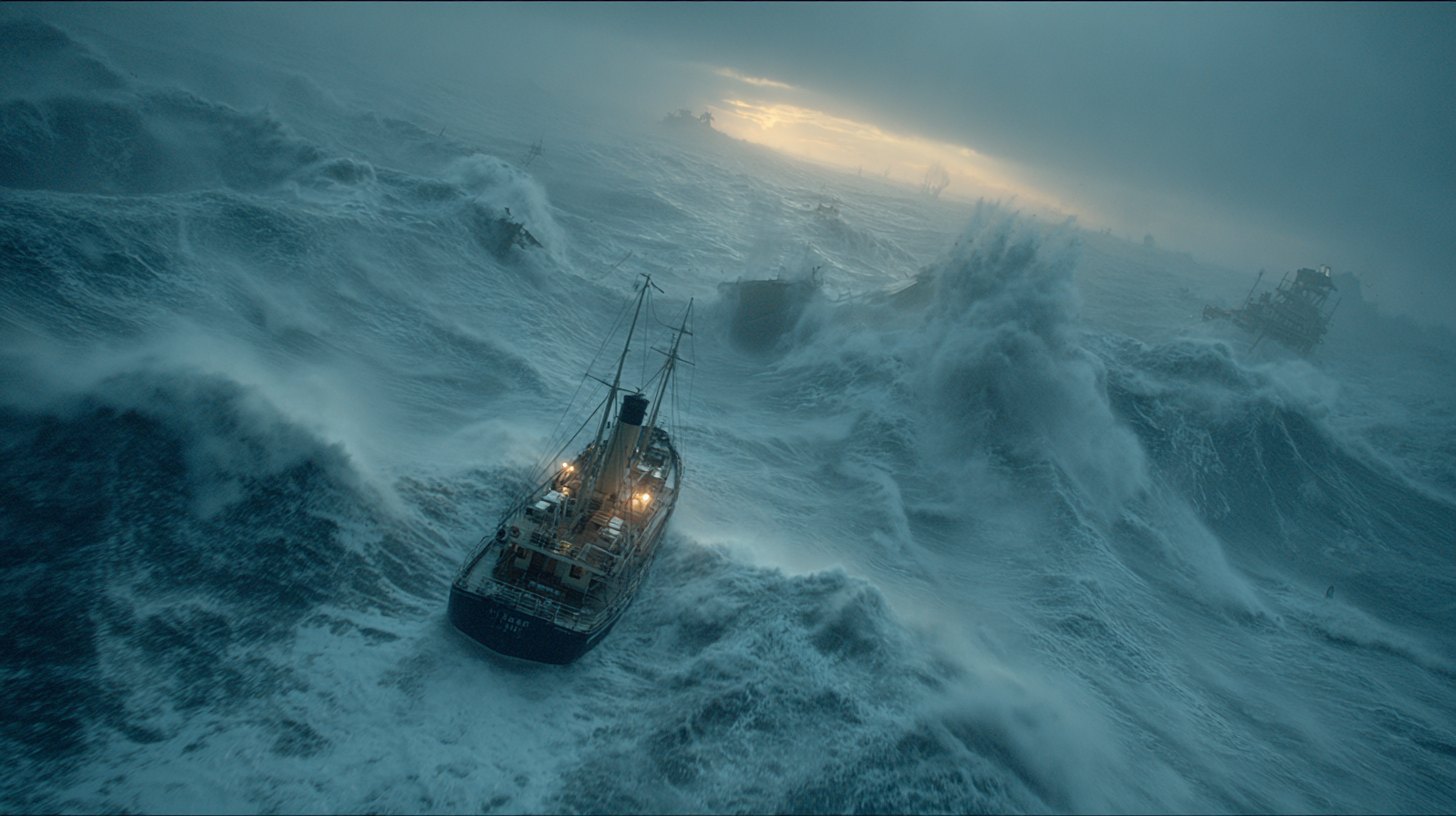
Are “Heavy Simulations” Still Worth the Effort?
One question dominates our internal discussions at Industrial Motion Art: Is it still worth the massive effort to set up “heavy simulations”—those computationally expensive, physically-based fluid or destruction effects? The answer is a moving target. It is a dynamic process that will continue to redefine itself as technology evolves. While neural simulations and real-time engines now produce startlingly good results in a fraction of the time, the absolute control and physical precision of traditional high-end simulations remain indispensable for top-tier cinema. We are steering our ship carefully through these “sandbanks,” ensuring we utilize the efficiency of new algorithms without ever sacrificing the artistic soul of the image.
Innovation at the European Film Market (EFM)
A highlight of this year’s festival is the increased focus on the intersection of tech and art. The introduction of the EFM Animation Days (running February 12–14) explicitly recognizes the growing weight of digital creation. Tanja Meissner, Director of Berlinale Pro, highlights the importance of this sector:
“The EFM Animation Days are a vital new initiative to strengthen a highly creative and dynamic sector… Showcasing the extraordinary talent and high level of creativity within the European industry is essential both economically and culturally.”
This focus on innovation—ranging from AI and Big Data to classic high-end animation—proves that European cinema is ready to face the future head-on.
A Vision for the Future
We will be diving deeper into these topics in a series of upcoming articles, shared at irregular intervals, to document our journey through this digital transformation.
But for today, the spotlight belongs to the filmmakers. We wish all participants of the 76th Berlinale the greatest success. Here’s to a future where European cinema, films, and series become even more successful globally while maintaining the high artistic standards and “Anspruch” they are known for.
May the Bears find their homes with those who have the courage to explore the unknown.
Reinhold A. Fragner Owner, Industrial Motion Art
Leave a Reply