
In Part 1, we delved into the creation of the VFX for “2025 – A Strauss Odyssey”: Working closely with Barbara Weissenbeck and Sylvia Massnovits, we designed spaceship concepts inspired by Viennese icons – from the Prater Ferris wheel to the clef. Core spaces such as the bridge, chill-out area, and biosphere combined functionality with Straussian poetry, balanced by plausible design à la Syd Mead and Feng Zhu.
Part 2 brought drama: the bold choice of the clef design, a rejection by ORF, and the triumphant comeback. Efficient workflows saved the plan – with physical set construction (lounge, technical consoles, a treadmill as a ring) and improvisations that turned setbacks into narrative opportunities. Pure adrenaline: from the ashes arose élan for the stars.
Part 3: Start of filming at Notenschlüssel – Where plan meets reality
We had scheduled exactly four days of filming. Four days to turn a spaceship from sketches and treadmill dreams into reality. Monday was officially declared a set-up day, but in reality, this is where the first dance between theory and practice began.
Monday morning at the GUXTU studio: The Aufgemoebelt team rolled in, loaded with the parts constructed from my plans. My credo from the outset had been to give our captain, Thomas Strauss, plenty of space. After all, he was supposed to actually dance the waltz later, weightless yet grounded. Even the large studio suddenly felt cramped, but thanks to the modular design – segments that could be pushed together like puzzle pieces – we had already solved that problem in advance.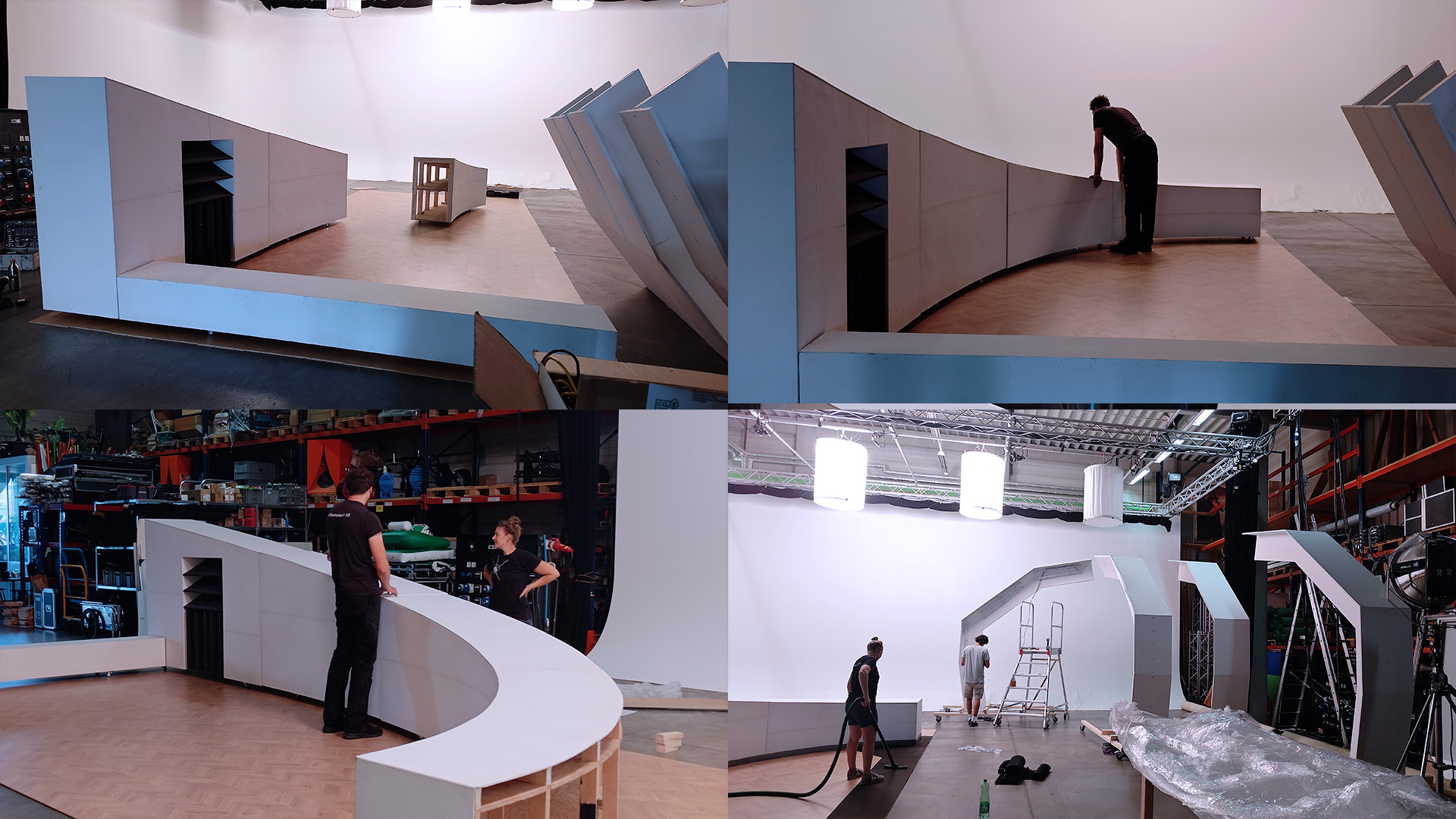
First on the agenda were the lounge scenes: that intimate, cozy area at the very front of the ship, covered by a monumental glass dome that did not physically exist. It would only be created later, virtually, as a seamless 3D element that blends perfectly into the real lighting atmosphere. Direction, camera, lighting, and set design worked together on the final refinements: upholstery a little softer, LED lighting a little warmer, a touch of Viennese coziness amid the coldness of space. Suddenly it was there: tangible, cozy, ready for reflection and waltzes.
At the same time, the arched light dummies came to life: delicate trusses, wired and tested, which would later serve as carriers for the digital hull in compositing. And, of course, the consoles – those elegant, futuristic interfaces where our astronaut would soon delve into his great-great-uncle’s archives and ponder his origins, music, and destiny. Every button, every light was deliberately placed, because I knew that later, sheet music would swirl through the cosmos and combine with stardust.
What was still theory on paper now began to breathe. And we were only at the beginning of the first of four days. Four days in which wood, light, and a lot of passion would be used to create a spaceship ready to carry Johann Strauss through the stars.
Tuesday: The first take begins – and the waltz starts
Tuesday morning, the air was buzzing with excitement. Thanks to the perfect setup day, Barbara Weissenbeck was able to start filming right away. The lounge was no longer just a set. It had become Thomas Strauss’ living room in space. Still in his tailcoat, exhausted from a night of heavy drinking on New Year’s Eve, our captain lay on the sofa, surrounded by “antique” treasures: an old tube radio waiting to be repaired, a Biedermeier table, a 1970s lamp. Barbara Weissenbeck staged this loneliness with an almost painful beauty – quiet, intimate, unaffected.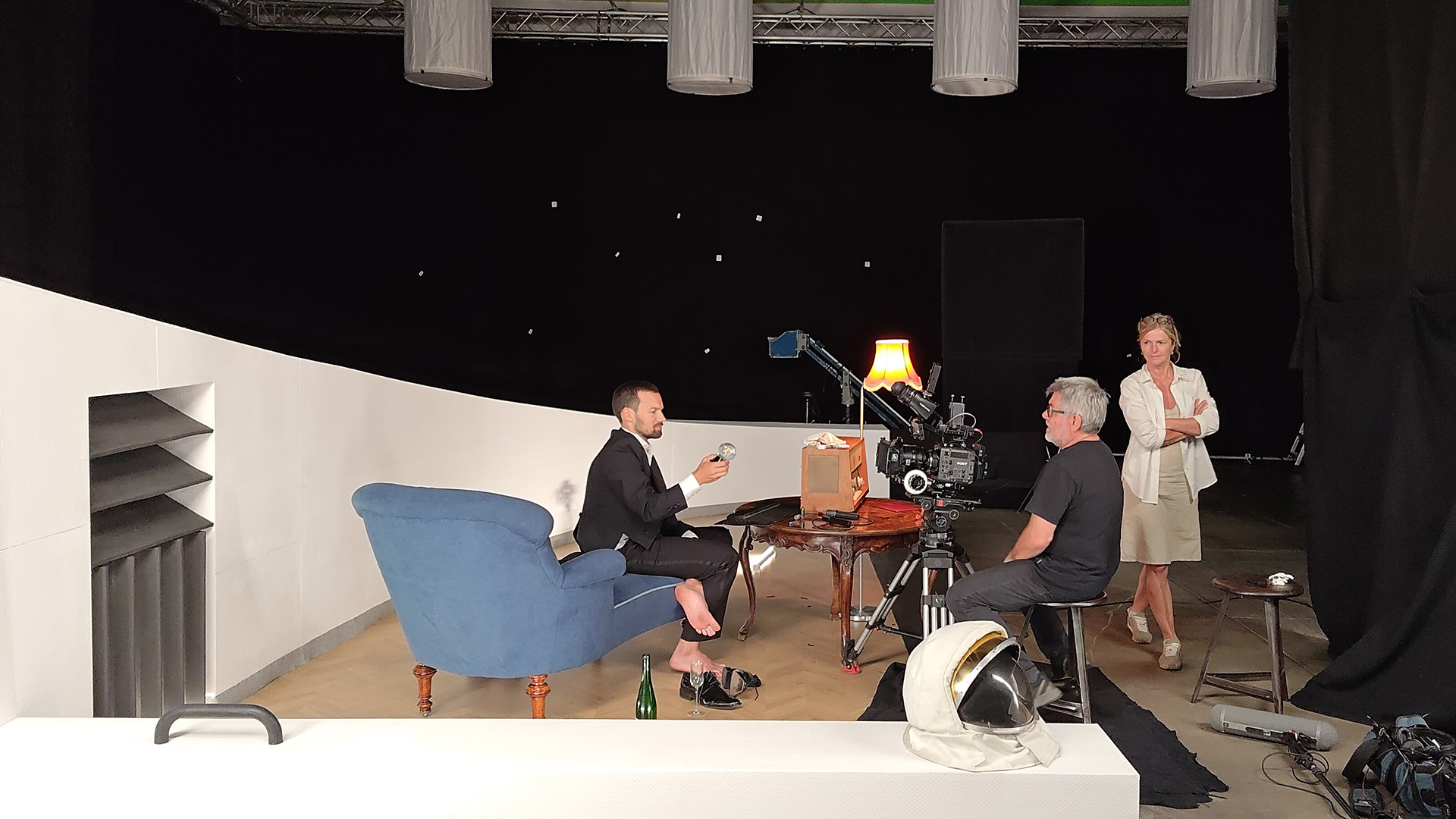
Then Erich Puchner, our lead lighting technician and lighting wizard, had to tone down his skills for a moment: flat, boring, bright light, no magic. While the crew took a coffee break, I took hundreds of photos of the lounge: all with the same focal length, ISO 100, and smallest aperture. A precise photogrammetry shoot so that the physical set could later be digitally reconstructed 1:1 and used for exterior shots in space and other scenes. A small but crucial step that would save us countless hours in post-production.
Now came costume changes, minor set alterations, and lighting changes. Scene by scene was shot, silent dialogues with the on-board computer, dreamy dance steps in three-four time to the silence.
As VFX supervisor, I had imposed golden rules on myself over the years: coordinate as much as possible with the director and production in advance so that filming is disrupted as little as possible. The director should and must direct the actors, camera, and crew – the VFX supervisor should not be an additional stress factor.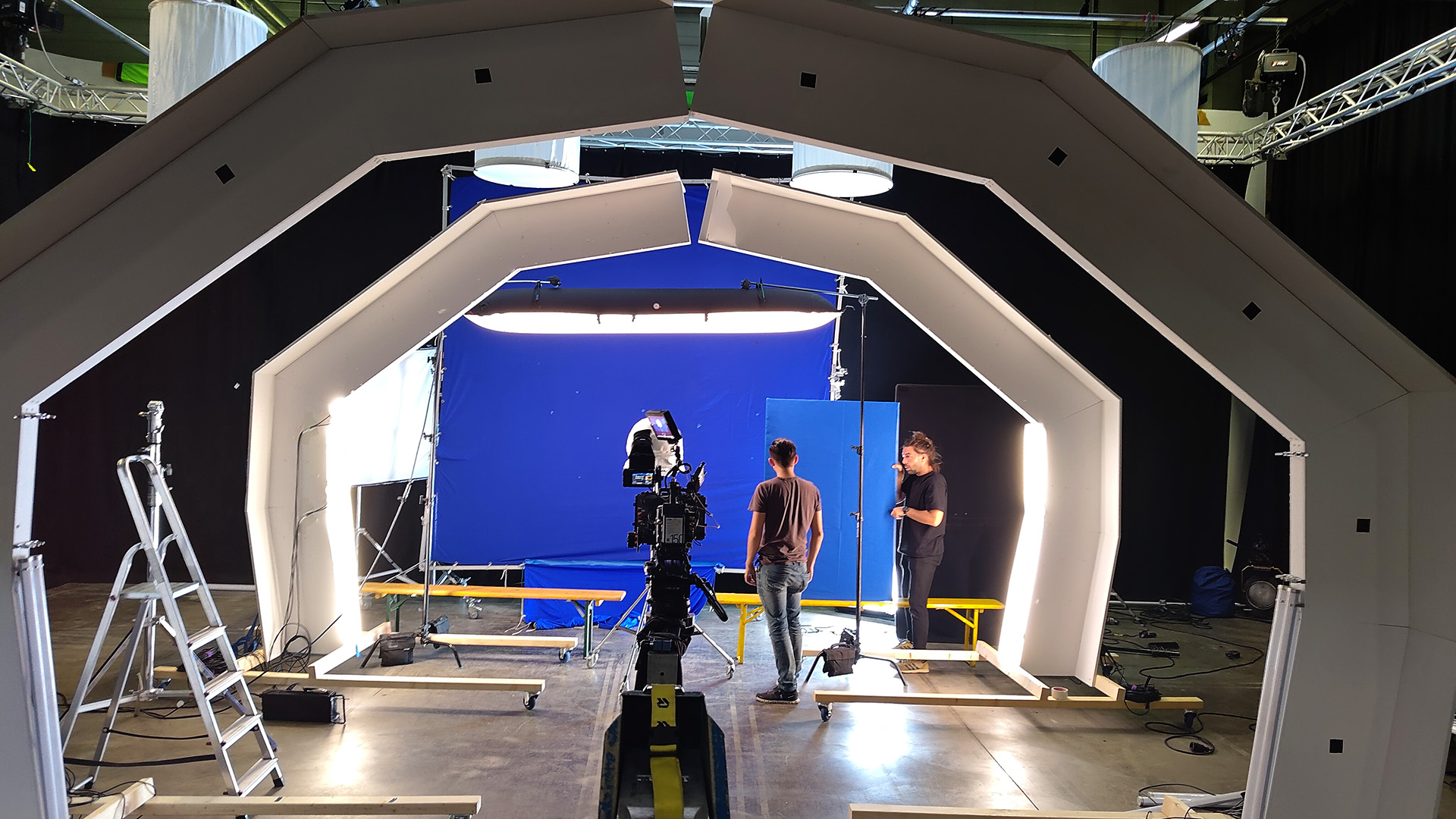
There are two things that are really important to me, and I share this with every colleague who has ever worked with me:
- Always be there for the director – right away when questions, ideas, or last-minute requests pop up. A “Can we quickly shoot this?” should never go unanswered.
- Always think along, get excited, follow along – every camera angle, every light, every movement. Because that’s the only way I can work my magic in post-production instead of desperately patching things up.
When I hear the phrase “Oh, we’ll do that in post” on set, I cringe inwardly. No! If anyone should say that, it should only be the VFX supervisor, and only after they have weighed up whether it will actually be more elegant, faster, and cheaper to do so later. Anything else is a dangerous free pass for carelessness.
This is often the reason why CGI and VFX still have a dubious reputation in some circles. With good pre-production, well-thought-out concepts, and an on-set supervisor who is involved from the outset, most of the headaches that arise later can be avoided, quality can be improved, and time and costs can be saved. Unfortunately, I am observing more and more that savings are being made in precisely these areas: less pre-vis, no supervisor on site, and the hope that “the post-production will take care of it.”
I fear that the current AI hype will accelerate this development rather than halt it.
Fortunately, things were different on the Strauss Odyssey. Barbara Weissenbeck and her entire team, from camera to lighting to set design, worked in an exemplary manner. Everyone understood that a well-planned shooting day is worth its weight in gold and that “in post” is not a panacea, but a last resort, a consciously chosen option. That’s exactly why flat lighting, photogrammetry, and an improvised set could be transformed into real magic.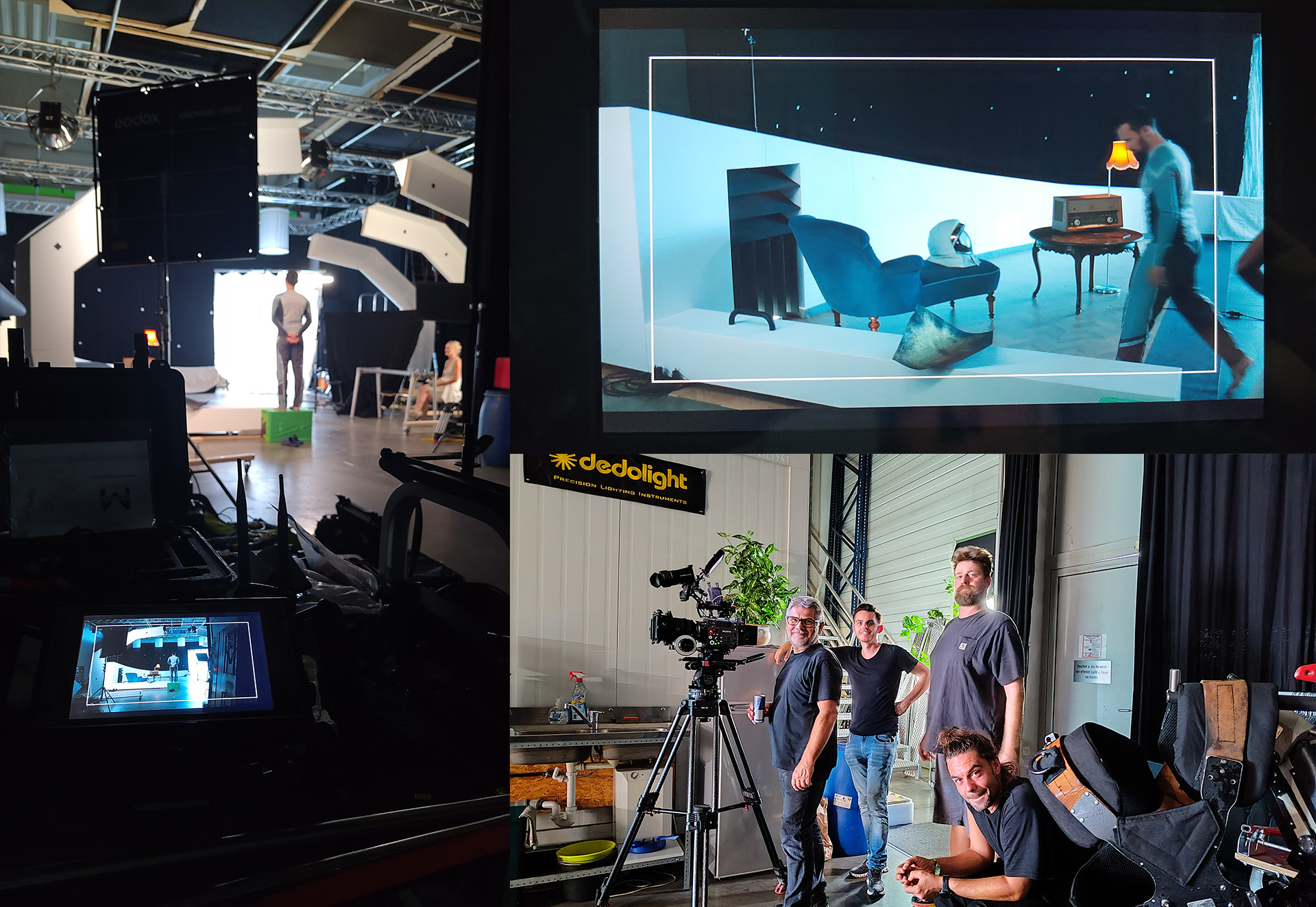
Wednesday: Command center and orangery – light, blue, and a hint of the future
On Wednesday, we moved to the command center, which seamlessly connected to the lounge – the area where our captain takes control and simultaneously embarks on a quest to discover his identity. This is where the four roughly constructed frame modules came into play: not as finished architecture, but as light dummies. They cast precisely the reflections and shadows that would later make the digital ship believable. Prepared, animated monitor content cast its cold, flickering cyan blue onto faces and fabrics – a glow that exuded authenticity.
Four real modules were enough to simulate twelve: thanks to our clever shot planning and a few targeted camera tricks, we created the illusion of a complete ring – a small but effective budget magic trick.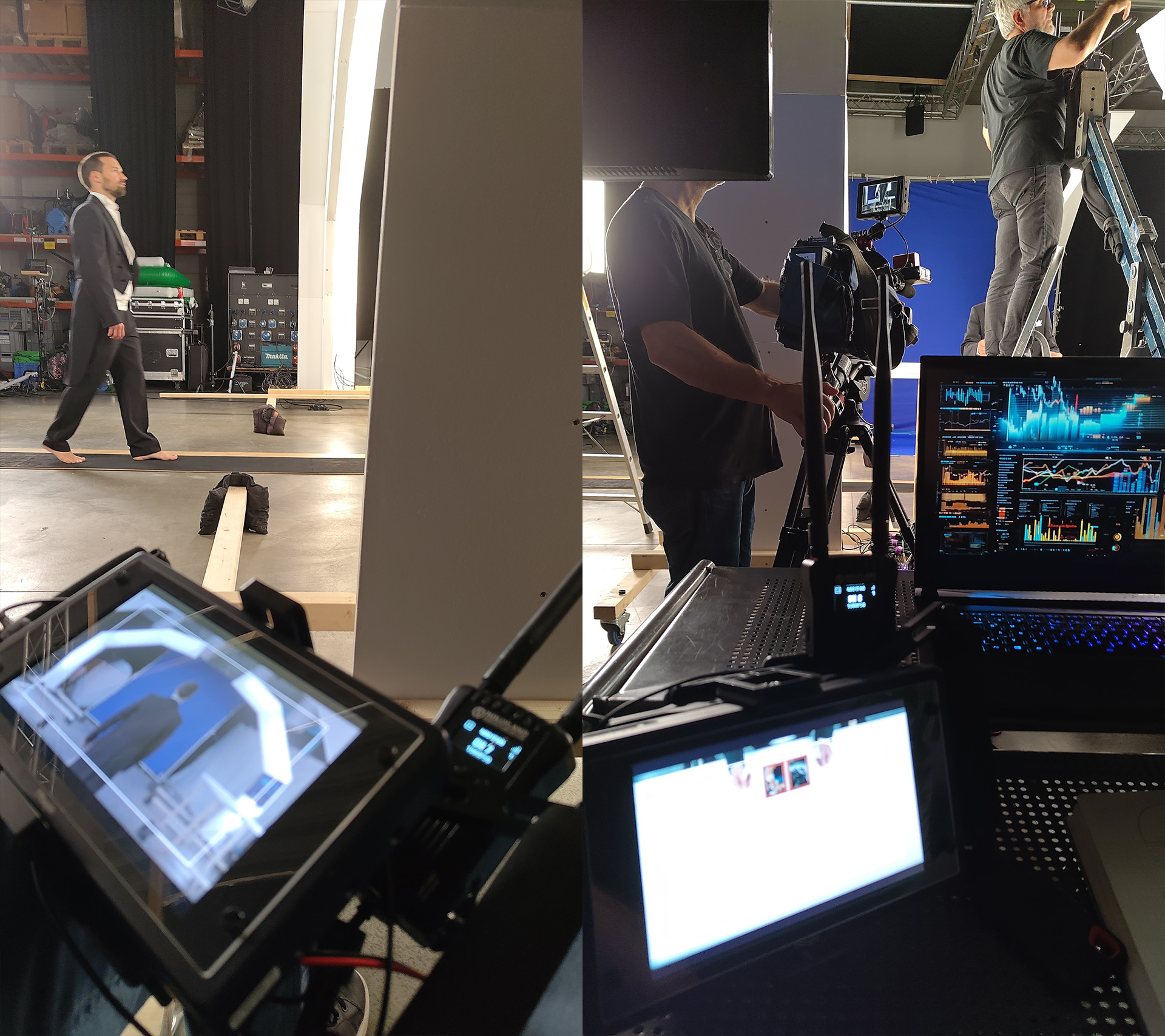
Why a blue screen instead of a green screen? Quite simply: to turn dissonance into harmony. A slight blue shimmer was part of the visual language of this film. The soft glow of the nearby Earth, the cold flicker of the screens, the melancholic mood of loneliness. A bright green would have constantly clashed with this color scheme. Blue, on the other hand, blended in. My tip from decades of experience: think about what color you really want your key to be during pre-production. And please, never light chroma key fabrics too brightly. It will save you tears later during keying.
The orangery was the last act of the day. Since only a few scenes were shot here, we decided on a completely virtual set. The physical floor remained, everything else was added later in 3D: lemon trees floating in starlight, petals slowly turning. Again, lots of blue – and again, the same thought: roto work that we still had to do by hand. A small test with current AI tools during production was, frankly, sobering. The technology is coming, no question, but it is not yet a substitute for a trained eye. Nevertheless, I am looking forward to the day when we can finally say goodbye to keying and rotoscoping work, and that day is getting closer.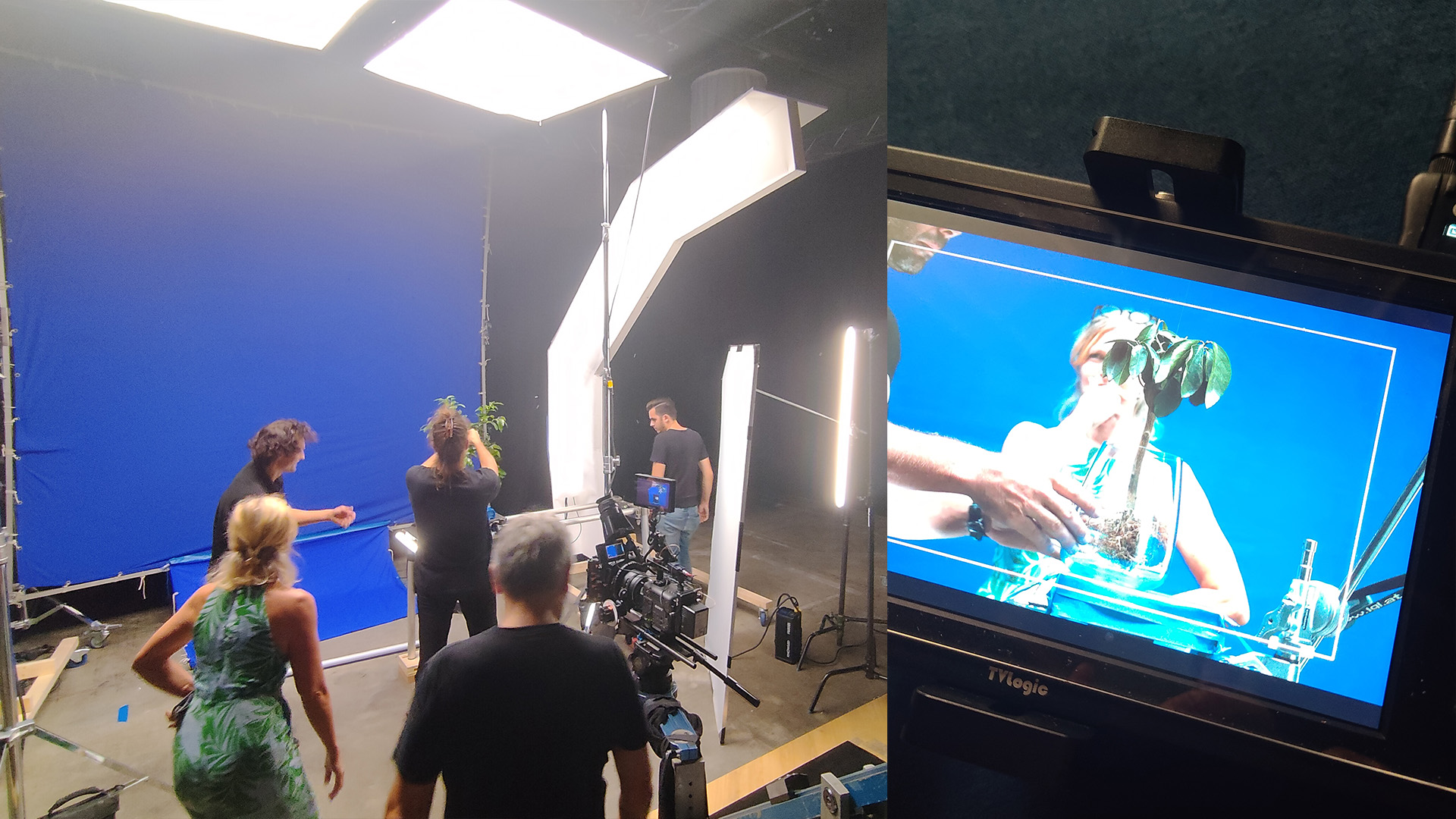
Last take. Wednesday went according to plan. A rare and wonderful thing in our industry. But Thursday was already waiting with the biggest challenge: the treadmill ring and artificial gravity.
Thursday: Last day of filming – stepping into the unknown
Thursday, the final act of our studio odyssey. The exit scene was scheduled for the morning. That breathtaking moment when our captain, Thomas Strauss, has to perform a desperate repair on the ship’s hull. He slips into his vintage space suit, a relic from the Apollo era, which he prefers – as only he knows how – to the sterile gloss of modern models. A touch of nostalgia amid the chaos, a tribute to the pioneers who conquered the stars before him.
Emergency lighting flared up: an intense red simulating the pressurized cabin alarm, while the hatch – for now just rough wooden panels covered with blue fabric opened. Behind it lay the vastness of space, the blue Earth below him. A distant, promising glimmer. Again, a blue screen, matching the earthy coolness.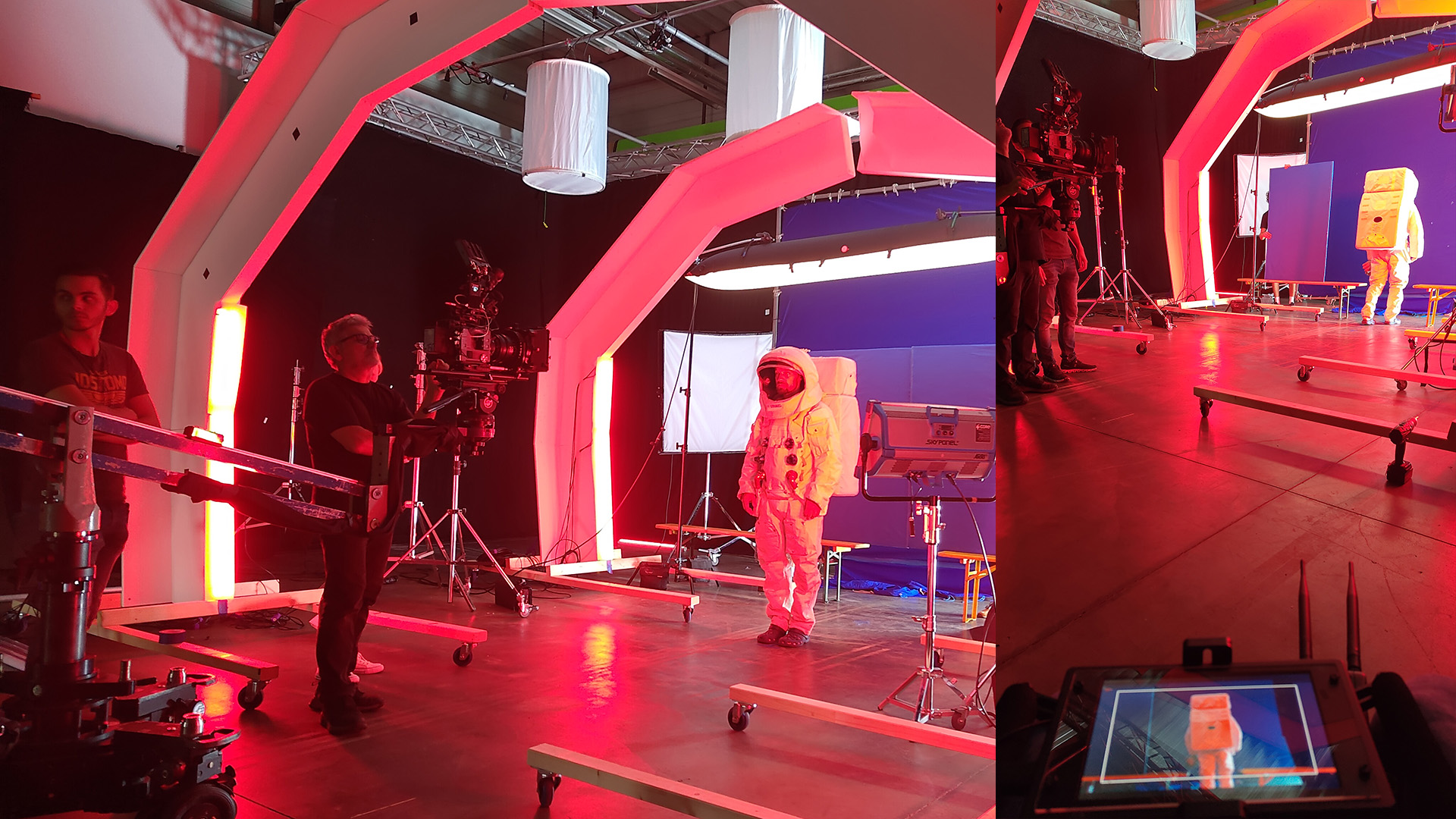
In addition to classic VFX supervisor tools such as colorcheckers, chrome balls, and fisheye lenses. I always recommend taking as many set photos as possible. They can often be helpful if not every light and camera position has been noted down.
Another highlight awaited us in the afternoon: our protagonist was to run in a 120-meter ring that generated artificial gravity through centrifugal force. A tribute to the set from 2001, only more ambitious. Well, the budget was just short of what was needed for such a colossus, and even Kubrick had to make do with his 11.5-meter ring on the ground – still too small to avoid nausea, but iconic nonetheless. Our solution? A converted treadmill as the core, enveloped in blue cloths and clever lighting that wove the illusion of rotation and weightlessness. Real sweat dripped here – Thomas Strauss, the real great-great-grandson – jogged in circles while Johann Strauss’ Perpetuum mobile played. A moment of pure, tangible magic: the man who carried the legacy became a pioneer.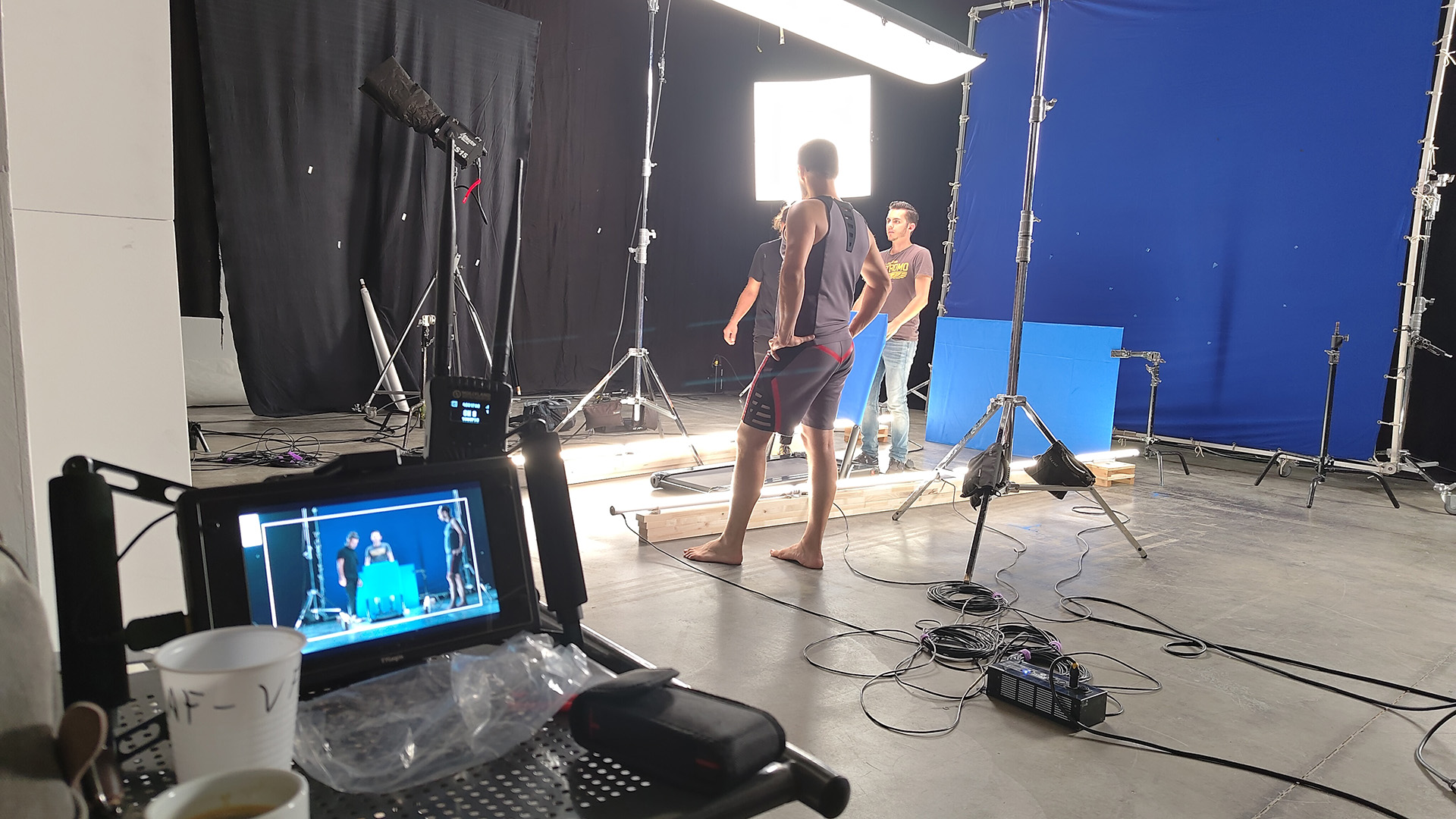
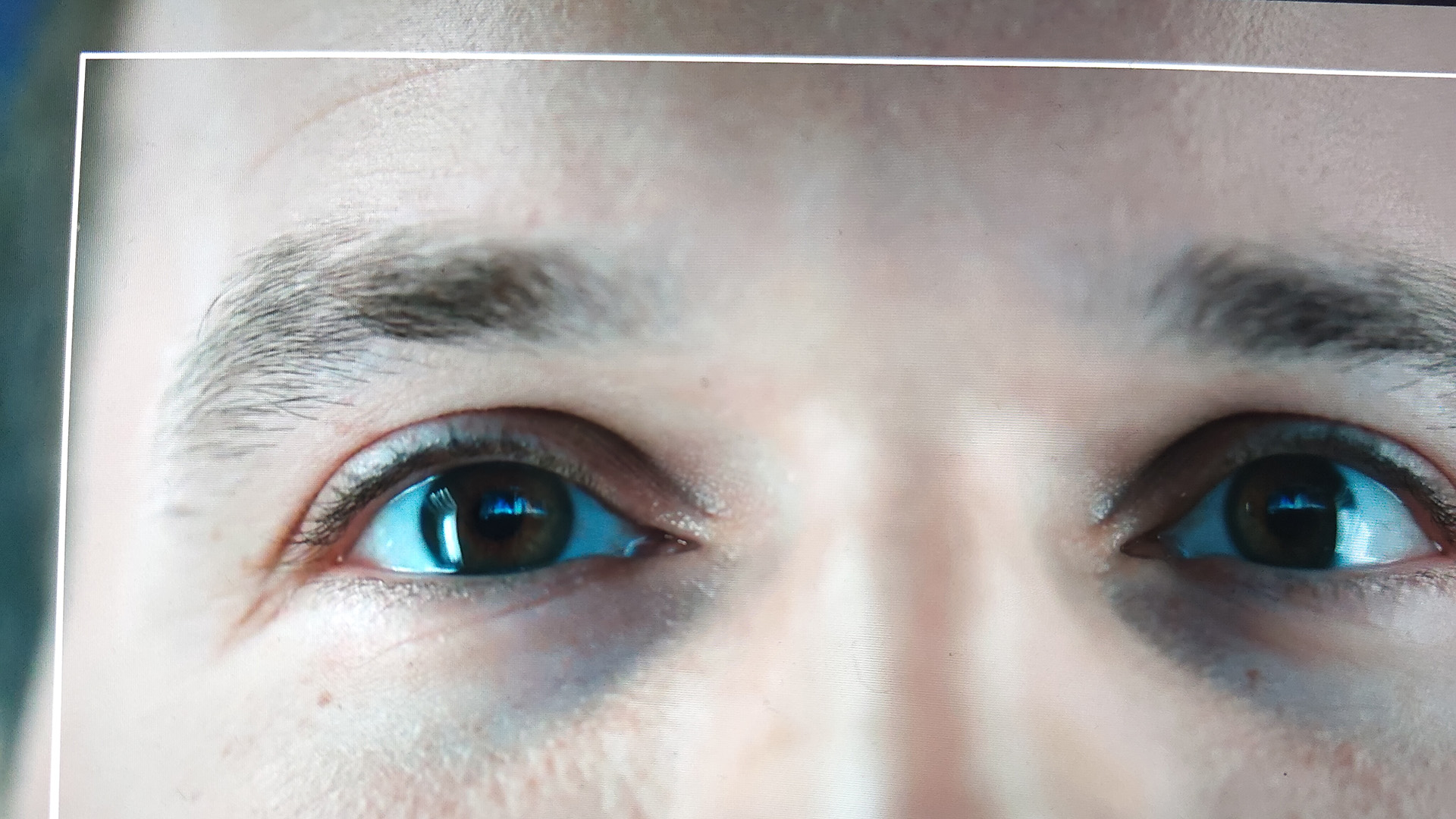
At this point, I would like to emphasize that it is not enough to develop concepts with the director alone. They must be presented to the actors, ideally in the presence of the director. This allows the actor to imagine the space and feel the emotions before setting foot in it. Thomas’ eyes lit up when he saw the sketches; he was already dancing through the ring in his mind long before the treadmill squeaked.
Admittedly, time was very tight on this day of shooting. This is where the value of a dedicated VFX supervisor comes in: with clever ideas developed as a team and targeted compromises: An extra take here, a proxy prop there – you can get the shoot back on track. No chaos, just flow.
Then finally the words were spoken: “That’s a wrap!”
Four days, countless takes, beads of sweat, and a studio full of people who had created something together that was greater than the sum of its parts. Of course, far more scenes were shot than I can describe here, intimate moments of silence, cosmic revelations, waltz steps in a circle. But they all bear the same signature: passion, precision, and a light that showed us the way.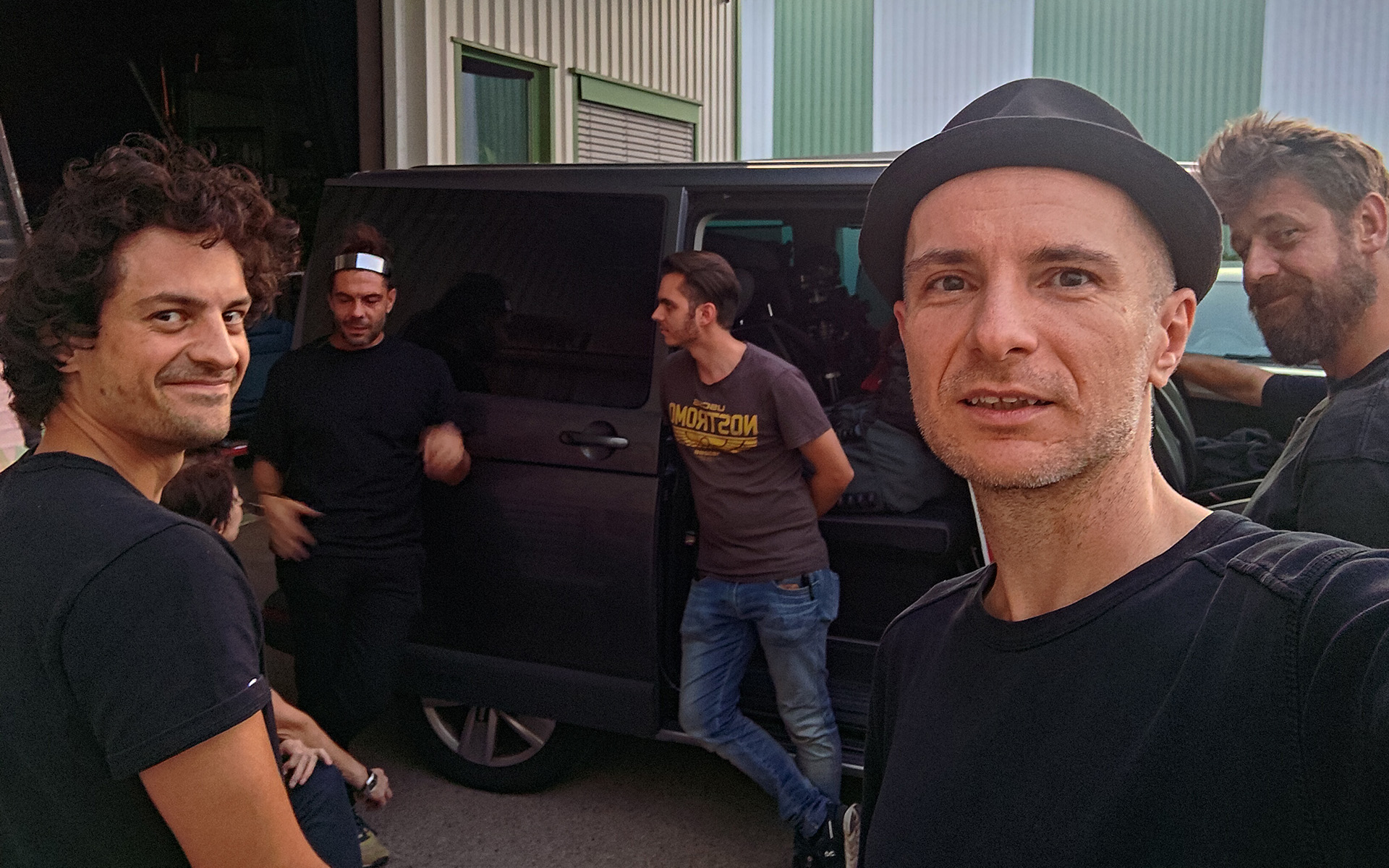
I would therefore like to take this opportunity to thank everyone involved. For the professional, warm, and, despite all the hustle and bustle, joyful shoot. And I would like to pause to remember a person without whose unmistakable light this odyssey would never have shone so brightly:
Erich Puchner – The painter with light
Born on January 29, 1981, in Tulln an der Donau, he was much more than a gaffer. He was the one who told a story with every beam of light. He had been shaping the Austrian film scene since 2007: from his early days as a lighting technician in Silentium to countless music videos and commercials to poetic documentaries and feature films. During our Strauss Odyssey, he conjured up the vastness of space, the gentle blue of the Earth, and the dramatic red of the emergency hatch from simple studio lighting. Always with the calm confidence and warmth that only true masters exude.
On September 13, 2025, Erich left us far too soon. He leaves behind a void that no spotlight can ever fill, but his light lives on in every frame he ever touched. Thank you, Erich – for the brightness you gave us and for the warmth with which you gave it. Rest in peace.
Leave a Reply