
A return after seven months, two projects I would like to present briefly, and a status report from an industry in the middle of a deep transformation.
Anyone who last read this blog in April might have gotten the impression that it was over. The opposite is true: over the past months I have been working on several productions, two of which have by now been broadcast, and which I would like to write about briefly. About the others, considerably more extensive projects, I am still bound to silence. More on that when I am allowed to. Promised: the wait will be worth it.
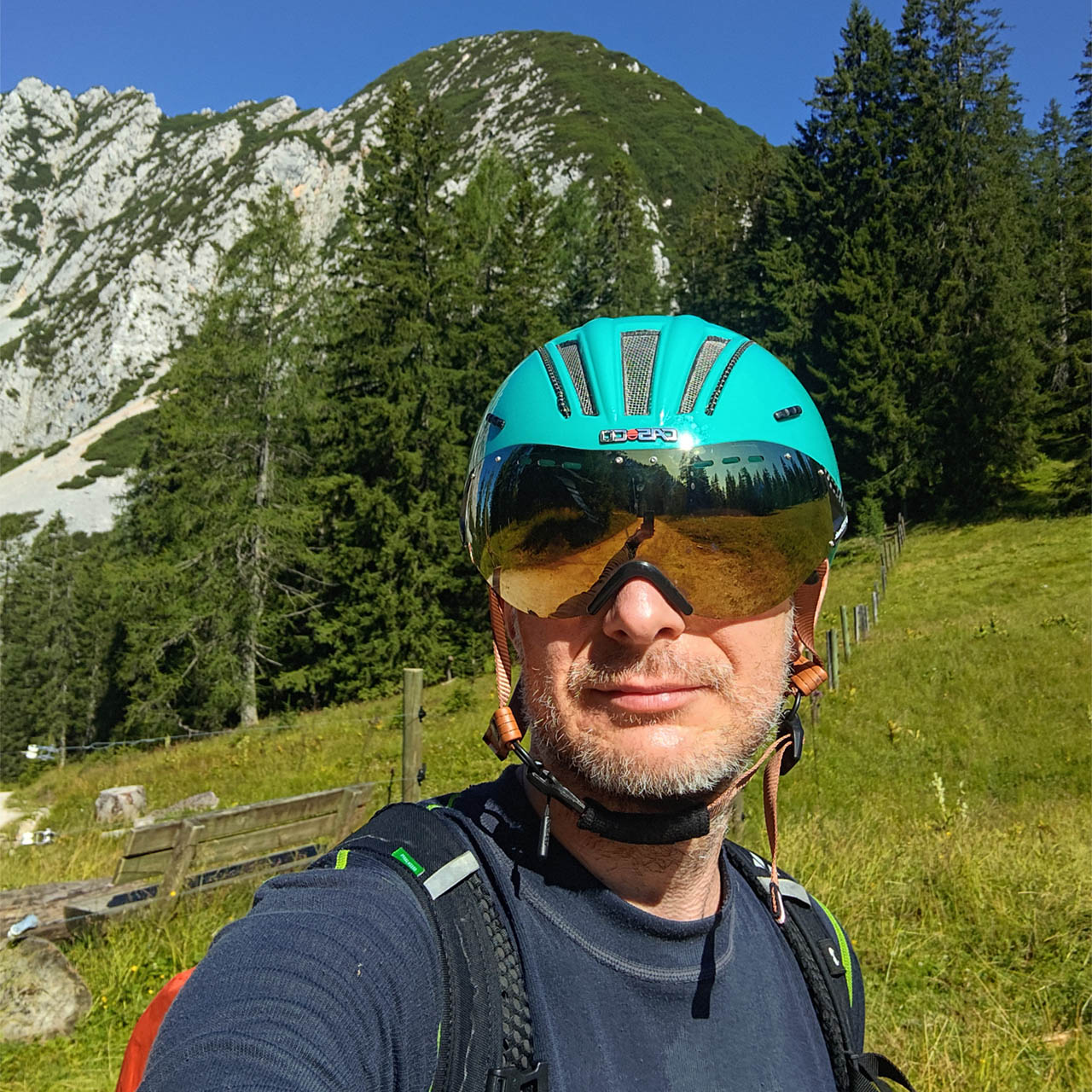
My Summer in the Mountains
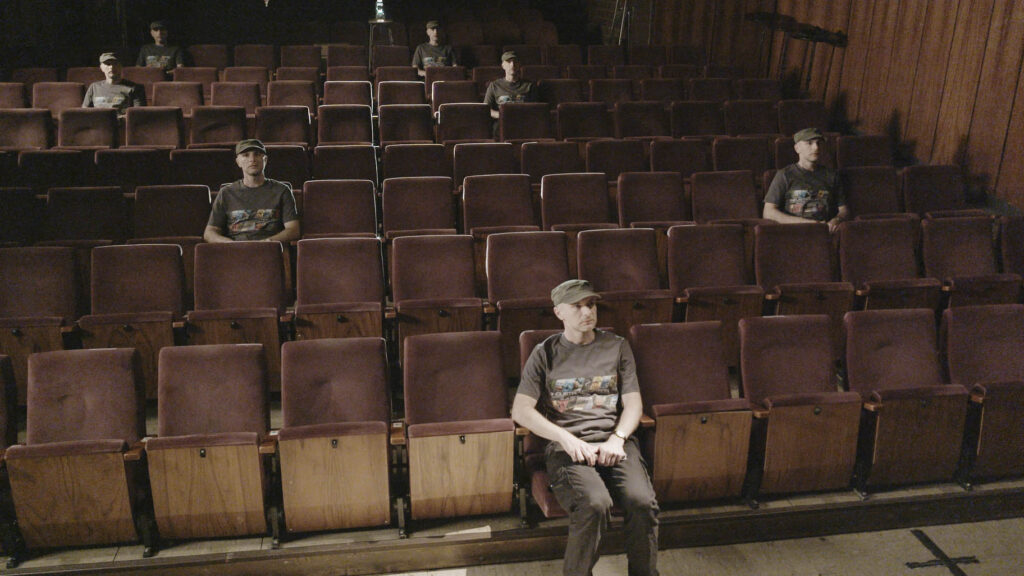
Herbert Tichy – Weltenwanderer, Bergsteiger, Sinnsucher (Herbert Tichy: World Wanderer, Mountaineer, Seeker of Meaning) is a Bergwelten docudrama that aired on ServusTV, Austria’s German-language channel, on October 5. Written and directed by Fritz Kalteis, produced by Wega Film (producers: Julia Heiduschka, Veit Heiduschka), commissioning editors: Hans-Peter Stauber, Franz Fuchs. The film traces Herbert Tichy, the Viennese travel writer and pioneer of high-altitude mountaineering who, together with Sepp Jöchler, made the first ascent of Cho Oyu in 1954. My work: VFX supervision and visual effects, from classic wire removal, this time the cables of modern lift systems that have no business in Tichy’s century, to digitally filling a hall with people.
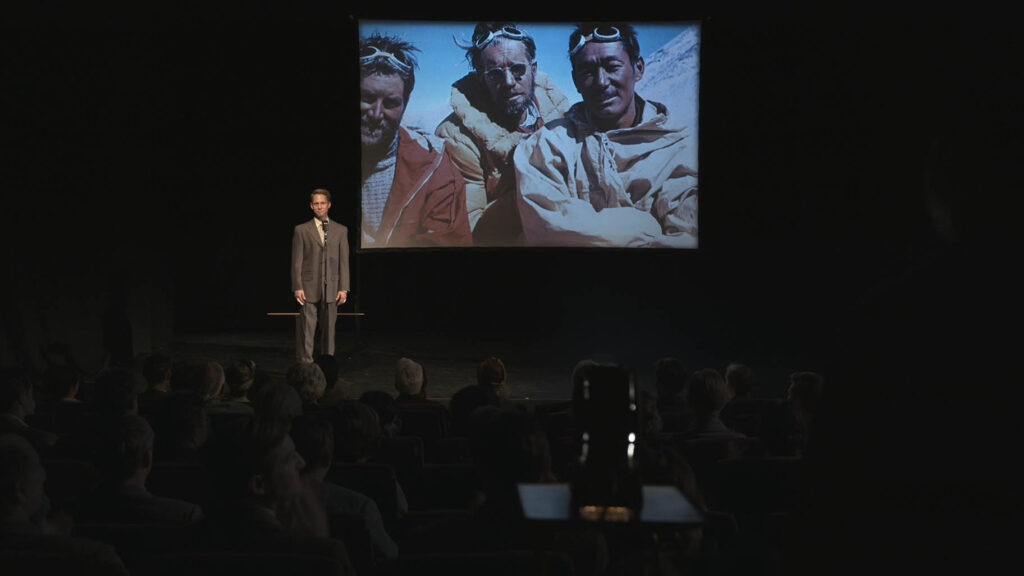
Personally, this project was a stroke of luck: I am out in the mountains myself on a regular basis, by mountain bike or on foot. Working on a portrait of one of the great pioneers of high-altitude mountaineering, making sure his world of 1954 stays coherent, is exactly the kind of invisible craftsmanship I like to get my hands into most.
kreuz & quer: Die Entschlüsselung des Tassilo-Codes (The Deciphering of the Tassilo Code) aired on ORF 2, Austria’s public broadcaster, on October 27. Directed by Martin Betz, a production by Feature Filmproduktion on behalf of ORF. The film follows the trail of the Tassilo Chalice, that most enigmatic of Austria’s art treasures, kept at Kremsmünster Abbey for centuries, whose anagrams, hidden animal depictions and eventful history lead from Salzburg to Kremsmünster and even through the hiding places of the Nazi era. My contributions: motion graphics and title design.
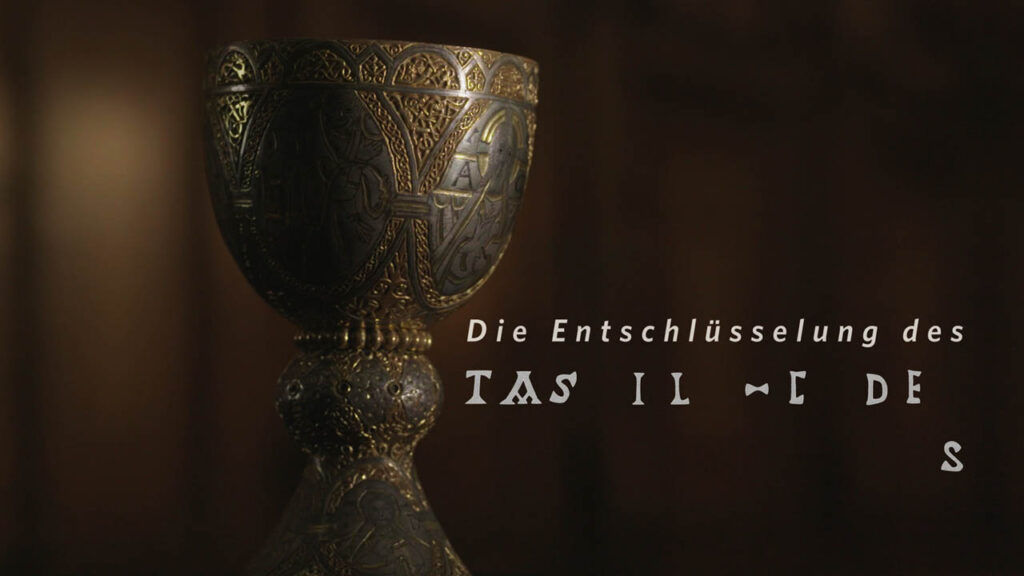
As a convinced atheist, I had to smile at quite a few of the reference points. But the journey of this chalice, hidden in the darkest of times, allowed to leave the abbey only for papal visits, is a story that would do an Indiana Jones adventure or a Dan Brown adaptation justice. I have little use for religions, but the history of religion can be very exciting and thrilling!
The Summer That Made the Industry Sweat
But this post is really a status report: in the seven months in which I immersed myself in projects, our industry has shifted in ways many would have considered improbable just two years ago: the major Hollywood studios have swung from AI bans to AI mandates. Daniel Seah, CEO of Weta FX, the house behind The Lord of the Rings and Avatar, says so openly by now: a VFX vendor who cannot show an AI strategy might as well not bother applying. Netflix, for its part, used generative AI as final footage in one of its own series for the first time in El Eternauta, by its own account ten times faster than with conventional tools.
I have experienced something similar in my studio and my day-to-day work: by no means does every process get the same speed boost, and the efficiency gains vary widely. But even just creating small tools and scripts, something you used to have to weigh up first to decide whether the programming would pay off at all, now comes easily.
You can read this turn cynically, as pure cost-cutting. You can read it soberly: the AI programs are here, they are getting better, and anyone who does not integrate them into their pipeline loses contracts, not necessarily to the machine, but to the competition that delivers faster. And you can read it the way James Rustand, head of GenFX at Netflix’s Eyeline studio, does: AI widens the options, but the decision which image serves the story stays with the human. I subscribe to the latter.
The Audience That Doesn’t Swallow the Hype
And now it gets interesting, because the studio level and the audience level are currently telling two very different stories.
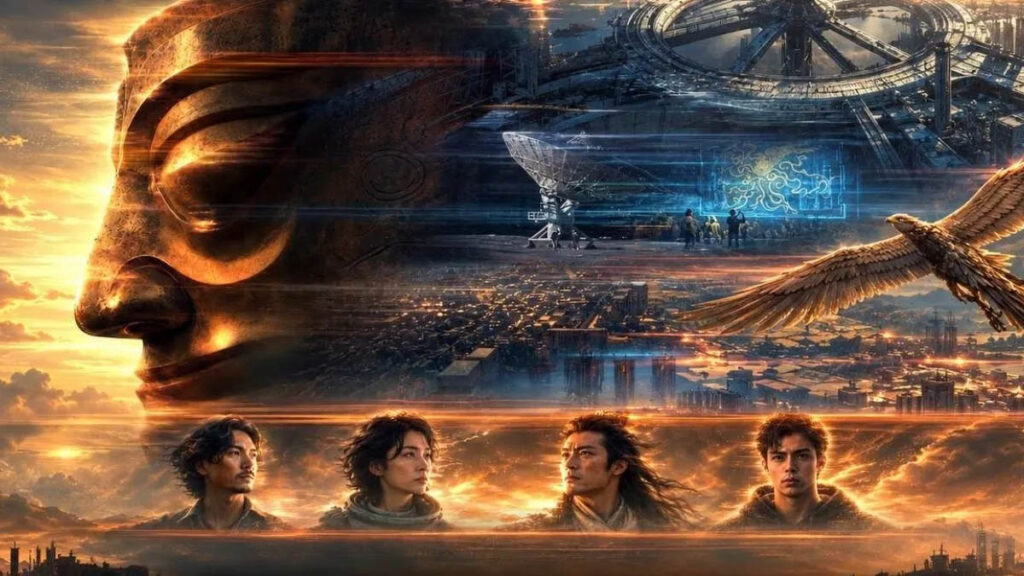
China’s first fully AI-generated feature film, Sanxingdui: Future Past by Bona Film Group, failed grandly at the box office: an estimated 181,000 dollars on opening weekend. Audiences described the result as “so obviously AI”, stiff images, an incoherent plot. What is remarkable is the divide: AI short-form content is booming on smartphones, so audiences do accept AI, but they refuse to pay cinema admission for a feature-length AI film. What deserves quoting here has little to do with technology: authorship was missing, and people could feel it.
And Dior? The luxury house advertised its Christmas spot Night in Color as hand-drawn animation, handmade art as a deliberate luxury USP. The shitstorm was prompt: deformed hands, jerky movement, and the suspicion of generative AI arrived faster than any proof. My beloved director Sylvain Chomet, who made the magnificent The Triplets of Belleville, rejected the accusations, but that is almost beside the point.
The case deserves a closer look. Even if, as many suspect, only the in-betweeners, those in-between images that in classical animation are drawn by assistants, were created with the help of AI programs, that would not be the actual scandal. Using AI where it takes work off people’s hands is no sacrilege, but it has to be disclosed from the very start, not defended only once the suspicion has long taken over the debate. The actual finding is a different one: today, mere suspicion is enough to ignite a witch hunt, the likes of which the book market experienced recently, when a novel was struck from the Prix Goncourt shortlist purely on suspicion of AI use. “Handmade” has become a scarce commodity, audiences defend it, and the mere suspicion of forgery costs a brand more than any effect. Authenticity has become an economic factor, and whoever has drawn that suspicion upon themselves hardly ever gets it back.
But Craft Alone Won’t Save You Either
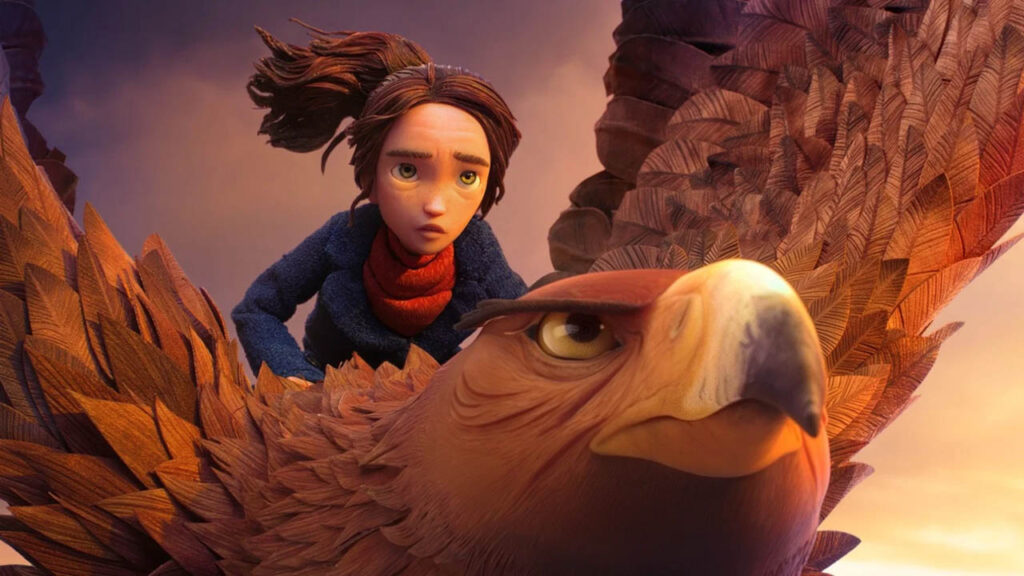
And now the uncomfortable second half of the truth, the one the craft rhetoric likes to gloss over: Wildwood, Laika’s stop-motion masterpiece, hand-made frame by frame, hailed by critics as one of the best films of the year, is running against its budget of roughly 100 million dollars and will most likely not recoup it. The quality is not missing. The craft is not missing. What is missing is a distribution mechanism that can still market handmade originals as a cinematic event. Between franchise machinery and streaming economics, the space for such things has become narrower than we would like.
So what we see is this: audiences punish both. AI without authorship, and craft without a market. Thought through to the success factors, the production method, in whichever direction, is simply not the decisive lever.
And the People?
Within the industry itself, the time of panic is not over, but it is differentiating. When Technicolor, the parent company behind MPC, The Mill and Mikros Animation, was shut down at the beginning of the year, many artists lost their work from one day to the next. But instead of tipping into a hiring freeze, the industry has redistributed much of it: studios like Rodeo FX and Framestore took over entire teams immediately afterwards and hired experienced people. The shock was real, but the work has not disappeared, it has moved. Autodesk’s CEO openly speaks of “fewer artists per film”, while at the same time industry job data shows that roto and paint roles have actually grown over the past twelve months, not shrunk, and that more than two thousand positions are open worldwide. Not dying, but restructuring. That restructuring, however, will not be evenly distributed, and that is the real concern one has to take seriously instead of papering over it with comforting formulas.
And Creativity?
So that nothing is misunderstood here, one thing up front: the theft of works for generative image creation is undisputed, and it must be compensated by the AI companies, retroactively as well. This debate is rightly being fought, and it is far from over.
But there is a second, far more controversial level: image generation itself, its possibilities and its dangers. For me personally, a clear line applies: my creative process does not run through an AI. Not because I would fundamentally reject the technology, but because creativity is precisely the part of my work that I want to do and can do. Whether it is worldbuilding, writing (yes, I have in fact been writing a few stories for a long time), sketching, or anywhere the first idea is born: that is supposed to come from me. Fed by my heroes like John Berkey, Stanley Kubrick, Buster Keaton, Fritz Lang, Andreas Feininger or Feng Zhu, and shaped by my life experience, be it in projects, in time with friends, or alone in the mountains. For me, AI therefore belongs in production, not in the idea.
My Conclusion
After seven months of distance, two (completed) projects and three flopping or burning cases, this is where I stand:
There is no success factor called technology. Neither AI, nor craft, nor even lies sell a work. The real factors are: the story, artistic authorship, honesty about how something was made, and a distribution that actually brings the work to an audience.
My own projects of the past months are proof to me that this ranking holds. On Tichy, the effects served a story that was meant to be taken seriously, which is why they had to remain invisible. On the Tassilo Chalice, the graphics were allowed to be visibly detective-like, because the story is one, an Indiana Jones mystery in which the reveal beats any effects showcase. In both cases, the technology was what it has always been: a means to an end. What makes the work good is not the technology, but the question of whom it serves, the story or your own showreel.
That is exactly why there will soon be a very practical post here: on the EU labeling obligation for AI-generated content, in force since August 2, 2026, with concrete examples from day-to-day production. The Dior storm was a preview of what this is really about: not bureaucracy, but the audience’s trust. Until then: I am back, and I am looking forward to the comment section.
Leave a Reply